Choosing Custom Reed Diffusers in 2026 requires more than selecting a pleasant fragrance and attractive bottle. The global home-fragrance category continues expanding, driven by wellness, interior styling, and premium gifting. Allied Market Research valued the global air freshener market at approximately USD 12.3 billion in 2022 and projects continued growth through 2032. Reed diffusers remain relevant because they provide continuous scent without flames, batteries, or visible smoke.
The numbers need careful reading. Different reports define “air fresheners,” “home fragrance,” and “reed diffusers” differently. That creates inconsistent market estimates. A practical buyer should compare sources, not trust one headline figure. Euromonitor International’s consumer research also highlights growing interest in sensory experiences and premium household products. This supports demand for refined packaging, longer-lasting formulas, and personalized scent profiles.
Performance comes first. Look for fragrance oils aligned with current IFRA Standards, stable carrier bases, porous reeds, and clear usage guidance. A 100 ml diffuser should feel balanced on a bedside table, not overpower a small room. Test evaporation speed, scent throw, leakage resistance, and label durability before approving large production quantities. Small details matter.
So does honest evaluation. A heavier bottle may improve presentation, but it increases shipping weight and breakage risk. Natural reeds may look attractive, yet their performance can vary. Custom Reed Diffusers should therefore be assessed through documented testing, supplier experience, and transparent material information. In 2026, the strongest choice will combine sensory appeal, reliable performance, responsible sourcing, and evidence-based decisions. Perfect formulas do not exist. Careful testing remains essential.
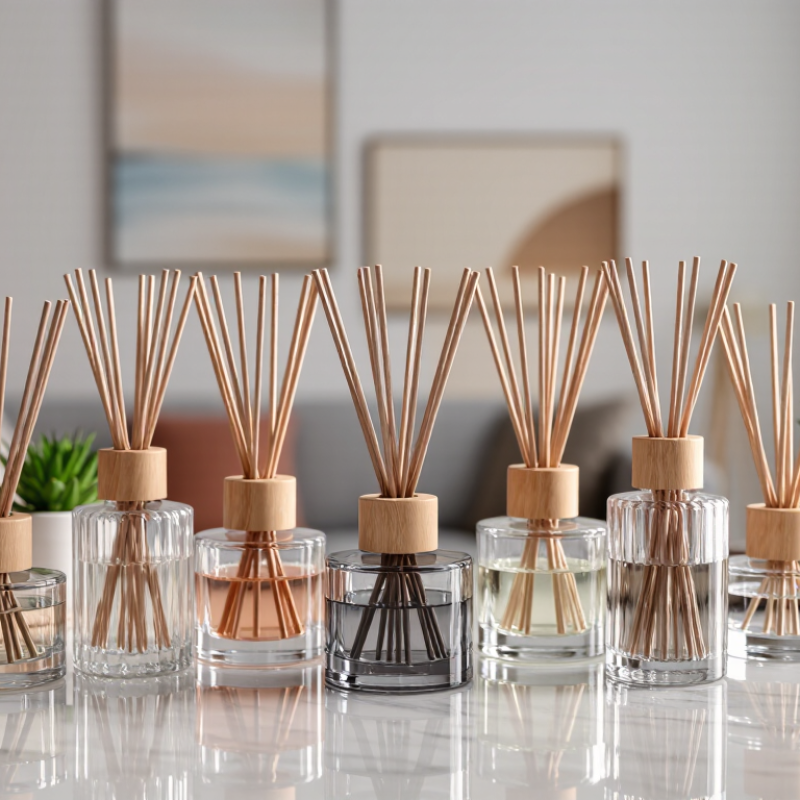
Custom reed diffusers are scent systems designed around a specific space, audience, and visual identity. In 2026, buyers are looking beyond fragrance alone. They compare vessel materials, reed performance, refill options, and ingredient transparency.
A well-designed diffuser should release fragrance steadily, not flood a room within one afternoon. Room size matters. A small ceramic vessel may suit a bedroom, while a larger glass container works better in a reception area. Test the fragrance for at least seven days. Scent perception often changes after the first few hours.
Custom diffusers serve homes, hotels, offices, wellness spaces, and seasonal events. Their uses differ. A hospitality space may need a subtle scent that supports comfort without distracting guests. A home user might prefer stronger notes near an entryway.
Natural reeds can vary in thickness and absorption, so performance may not be perfectly consistent. That is worth admitting. Ask for safety documentation, allergen information, and clear usage instructions before approving a large order. Responsible suppliers should explain the fragrance base, recommended reed count, and expected lifespan.
Tips:
Start with a sample set. Record scent strength, evaporation speed, and leakage after one week. Choose recyclable packaging where practical. Keep diffusers away from heat, children, and pets. Avoid turning reeds too often; once or twice weekly may be enough. If the scent feels weak, add one reed at a time rather than replacing everything. Small adjustments often work better.
Choosing custom reed diffusers in 2026 starts with defining the fragrance experience. Avoid vague requests such as “luxury” or “clean.” Describe the setting instead: a quiet bedroom, citrus near an entryway, or cedar beside a desk. Ask the perfumer for top, middle, and base notes, then test the blend on blotter strips and reeds. A fragrance that smells elegant for ten minutes may become sharp after several hours. Allow at least one full day for evaluation. This wait feels slow.
Size should match both the room and the desired intensity. Calculate the bottle volume, reed count, and opening width together. A compact diffuser may suit a bedside table, while a larger vessel can support a spacious lounge. More reeds do not always mean better diffusion. They can create an overpowering first impression. Test the product in the actual room, with normal ventilation and temperature. Record how the scent changes during morning, afternoon, and evening use.
Design must support function, not only photography. Match the bottle shape with the customer’s grip, shelf space, and pouring needs. Confirm that the stopper prevents leakage during transport. Request material details, fragrance safety documentation, and compatibility testing between the liquid and vessel. A recycled-looking finish may still perform poorly. Do not trust appearance alone. Review one finished sample before approving a larger run. One sample can reveal cloudy liquid, uneven printing, or a weak cap. That is where the plan may need revision.
How to Choose Custom Reed Diffusers in 2026?
Choosing custom reed diffusers in 2026 starts with the oil, not the label. Test each fragrance in the actual diffuser base, because scents can change after several days. I prefer oils with clear ingredient documentation, safety data, and supplier usage guidance. Ask whether the formula suits reed diffusion and the intended room size. Stronger is not always better. A small bedroom needs restraint, while a lobby needs controlled scent throw. Check IFRA guidance and local requirements before production. Documentation should match the finished product, not a similar sample.
Reeds control release speed. Natural rattan usually provides reliable channels, while fiber reeds may offer steadier output in some formulas. Test different diameters and lengths inside the final bottle. Thin reeds can diffuse quickly but empty the vessel too soon. Thick reeds may feel weak. That trade-off matters. Turn the reeds during testing, record scent strength, and measure evaporation weekly. A two-week test is useful, but longer observation is wiser. Humidity, airflow, and sunlight can distort results.
Bottle selection affects performance and waste. A narrow neck can slow evaporation, while a wide opening may increase scent and consumption. Use compatible glass, a stable base, and secure packaging to reduce leakage during transport. Recycled or recyclable materials sound sustainable, but the full package needs assessment. Heavy glass may be reusable yet costly to ship. Lightweight packaging can reduce transport impact but feel less premium. Avoid claiming “eco-friendly” without supplier evidence. Test before scaling.
Selecting diffuser oils, reeds, bottles, and sustainable materials starts with understanding the practical properties of each component. The chart compares the approximate density of common bottle materials used for reed diffusers.
How to read the chart: Glass and aluminum are denser but can provide a premium, durable package. PET and PP are lighter and may reduce shipping weight. Density alone does not determine sustainability, so also evaluate recycled content, recyclability, refillability, local recycling systems, oil compatibility, reed performance, and packaging volume.
Values are representative engineering densities at room temperature; exact values vary by material grade and manufacturing process.
Customization should begin with the intended room, not the bottle alone. Choose the vessel shape, closure, reed color, fragrance strength, and fill volume together. A narrow bottle may look elegant but can slow evaporation. Natural reeds may absorb differently after humid storage. Request pilot samples with the final packaging. Test them in a bedroom, reception desk, and small retail space. Real conditions reveal problems that product photos hide. Keep the details practical.
Supplier evaluation requires evidence, not polished promises. Ask for fragrance documentation, material specifications, batch records, and a clear quality-control process. Reliable suppliers should explain how they test leakage, evaporation, color stability, and reed absorption. Request samples from more than one production batch when possible. Check whether labels include required warnings, ingredients, volume, and responsible-use instructions for your target market. Local requirements can differ sharply. A document prepared for one country may not satisfy another.
Compliance also depends on transport and storage. Confirm packaging strength, closure security, and spill-control procedures before ordering at scale. I once underestimated how much a cap design affected leakage during delivery. That was an avoidable lesson. A supplier may offer endless colors and scents, yet weak traceability remains a serious concern. Review corrective-action records when available, and define acceptance standards in writing. No test predicts every room, season, or customer preference. Leave room to revise the formula, packaging, or instructions after measured feedback.
Comparing Costs, Minimum Orders, Timelines, and Long-Term Value
Custom reed diffuser pricing depends on more than the bottle. Ask for separate costs for fragrance, reeds, caps, labels, cartons, sampling, and shipping. A low unit price may hide expensive setup fees. Small orders cost more. Minimum order quantities often range from hundreds to several thousand units, depending on packaging and filling requirements.
Request a physical sample before approving production. Check scent strength, liquid clarity, reed absorption, cap fit, and leakage after transport. A realistic production timeline includes design approval, sample revisions, material purchasing, filling, inspection, and delivery. Four to eight weeks may be reasonable, but imported components can add unexpected delays.
Delays happen.
Long-term value comes from consistency and reliable replenishment. Ask whether the supplier can repeat the same fragrance profile six months later. Confirm batch records, safety documents, label requirements, and storage guidance for your target market. These details show professional control, not just attractive presentation.
A cheaper diffuser that leaks in a warm warehouse can damage customer trust and create replacement costs. I have seen purchasing decisions focus too heavily on the first invoice. That is understandable, but incomplete.
Compare total landed cost, defect rates, lead times, and communication quality before choosing. Keep a small reserve for testing and changes. Your first specification may need revision.
Describe the setting, not vague words like “luxury” or “clean.” Mention a quiet bedroom, citrus near an entryway, or cedar beside a desk. Ask for top, middle, and base notes. Test the fragrance on blotter strips and reeds.
Test it for at least one full day. A scent may seem elegant for ten minutes, then become sharp. Check it in the morning, afternoon, and evening. This wait feels slow.
Match bottle volume, reed count, and opening width to the room. A compact diffuser may suit a bedside table. A larger vessel may work better in a spacious lounge. More reeds can create an overpowering first impression.
Yes, whenever possible. Use normal ventilation and room temperature. Observe how the scent changes during daily use. A small test room may not reflect a large lounge.
Check the bottle’s grip, shelf space, and pouring area. Confirm that the stopper prevents leakage during transport. Review the liquid and vessel for compatibility. Appearance alone is not enough.
One finished sample can reveal cloudy liquid, uneven printing, or a weak cap. Check scent strength, reed absorption, cap fit, and transport leakage. The plan may need revision. That is normal.
Request separate prices for fragrance, reeds, caps, labels, cartons, sampling, and shipping. Include setup fees and imported components. Small orders often cost more. A low unit price can hide expensive extras.
Include design approval, revisions, material purchasing, filling, inspection, and delivery. Four to eight weeks may be reasonable, but delays can occur. Compare total landed cost, defect rates, replenishment consistency, and communication quality. I might focus too much on the first invoice. That would be incomplete.
Choosing Custom Reed Diffusers in 2026 begins with understanding how they can support home ambiance, hospitality settings, retail environments, gifting, and promotional projects. Start by defining the desired fragrance profile, room size, bottle capacity, visual style, and overall user experience. Consider whether the design should communicate elegance, simplicity, natural appeal, or a specific seasonal theme.
Next, evaluate the diffuser oil formula, reed performance, bottle materials, closures, labels, packaging, and sustainable alternatives. Reliable suppliers should offer consistent fragrance quality, clear ingredient information, appropriate safety documentation, and dependable production standards. Compare customization capabilities, sample services, minimum order quantities, unit pricing, lead times, and quality-control procedures before making a decision. Although a lower initial cost may seem attractive, long-term value also depends on scent longevity, packaging durability, customer satisfaction, reorder flexibility, and material sustainability. A well-planned Custom Reed Diffusers project balances appearance, performance, compliance, budget, and scalability to create a product that remains appealing and practical throughout 2026.