Choosing a solid perfume manufacturer is a practical decision, not merely a search for the lowest quotation. The right partner should understand fragrance development, wax behavior, packaging limits, and consistent production control. In real projects, a beautiful sample can fail when exposed to heat, repeated handling, or long storage. Solid Perfume Manufacturing requires careful testing from the first formula to the final filled compact. Ask how the manufacturer selects waxes, oils, fragrance materials, and stabilizers. Request documented procedures for weighing, mixing, filling, cooling, and inspection. Details matter.
A reliable manufacturer should provide clear specifications, batch records, stability information, and realistic production timelines. Their facility should demonstrate suitable hygiene practices, trained staff, calibrated equipment, and traceable raw materials. Certifications can support credibility, but they should not replace direct questions or sample evaluation. Examine the product closely. Does it glide smoothly? Does the scent remain recognizable after several weeks? Does the container protect the formula without leaking or cracking? These observations reveal more than a polished presentation.
Experience also means recognizing uncertainty. No supplier is flawless. A minor texture change may appear between batches, especially when natural ingredients vary. Discuss how deviations are investigated and corrected. Confirm ownership of formulas, artwork, testing data, and unused materials before signing an agreement. A strong manufacturer communicates limitations instead of making impressive promises. This approach helps brands balance creativity, safety, quality, and commercial practicality. The best partnership is built through evidence, transparent communication, and steady improvement—not assumptions.
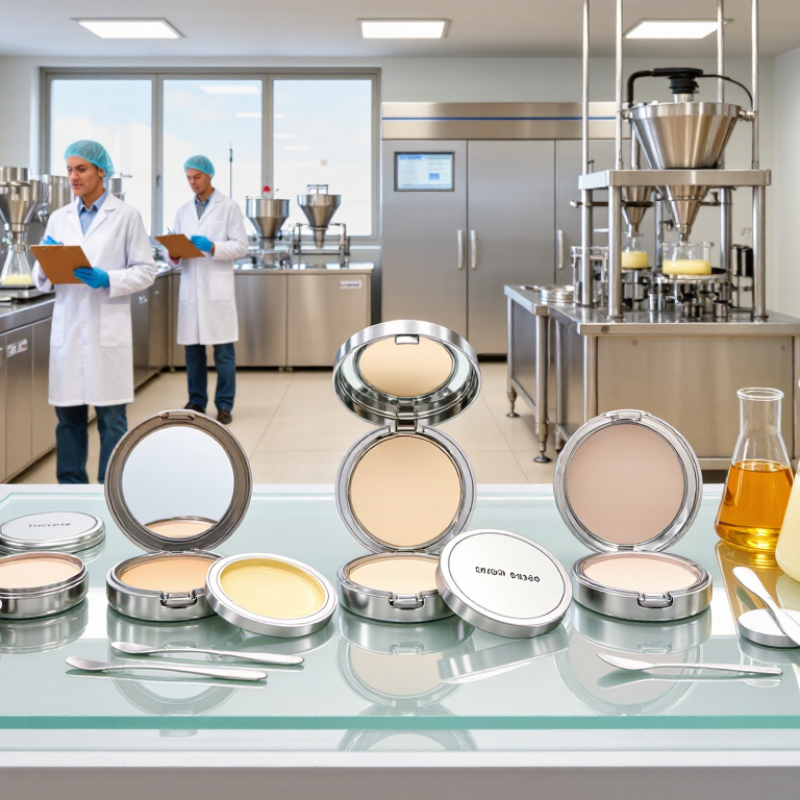
Before comparing manufacturers, define what your solid perfume must do in daily use. Decide the fragrance format, target users, application area, and expected wear time. A balm for wrists differs from a compact designed for handbags. Specify the texture with practical language: soft enough to glide, but firm enough to remain stable at 35°C. State the finish, scent strength, absorption speed, and acceptable residue. “No greasy film” is clearer than “pleasant texture.”
Your product brief should list the preferred base, fragrance concentration, color limits, and ingredient restrictions. Ask for allergen information, safety documents, stability testing, and packaging compatibility data. A paper specification is not enough. Test samples after heat exposure, repeated opening, and several weeks of storage. Check whether the scent changes, the surface cracks, or the balm sweats. These details reveal manufacturing discipline. I have seen attractive first samples fail because the formula softened inside a warm delivery box.
Define the container size, fill weight, closure style, label area, and application method. Include production volume, acceptable variation, target cost, and delivery expectations. Request a pilot batch before approving larger production. Test it with real users, not only in a controlled office. Your first requirements may be incomplete. That is normal. Record every weakness, even a slightly loose lid or a scent that disappears too quickly. Clear revisions help the right manufacturer respond with evidence, not vague promises.
Choosing a solid perfume manufacturer starts with careful comparison, not attractive product photos. Build a shortlist from verified directories, trade references, and technical referrals. Request business licenses, facility details, and recent quality certificates. A polished website proves very little.
Ask each manufacturer for a sample set made with the same fragrance brief. Check melting behavior at room temperature and after gentle warming. Observe the surface, scent strength, residue, and ease of application. Record every result. My early mistake was judging samples after one day; some formulas changed noticeably after two weeks.
Compare minimum order quantities, development fees, production capacity, and realistic lead times. Request a written ingredient specification, allergen information, safety documents, and batch-testing procedures. A reliable supplier should explain how raw materials are approved and how finished units are inspected. Ask for packaging compatibility tests, especially when tins, glass, or paper components are involved.
Look beyond the lowest quotation. A cheaper unit may hide unstable materials, weak documentation, or repeated delays. Speak with the technical and production teams, not only a sales representative. Ask how they handle failed batches, revised formulas, and customer complaints. Their answers reveal operational maturity. Keep a comparison sheet with evidence, dates, and open questions. No manufacturer will be perfect. Your evaluation should remain cautious.
Research and compare potential manufacturers using a weighted evaluation framework.
This example screening model gives the highest priority to product safety and regulatory compliance, followed by quality consistency and fragrance performance. MOQ, scalability, lead time, and communication should also be reviewed before selecting a manufacturer. Adjust the weighting to match your product requirements and market regulations.
Choosing a solid perfume manufacturer starts with formulation, not packaging. Ask how the team balances waxes, oils, fragrance concentrate, and skin feel. A reliable formula should soften smoothly on contact without becoming greasy in warm conditions. Request stability data from accelerated heat, freeze-thaw, and light exposure tests. Solid perfume contains little water, but contamination remains possible during use.
Ingredient control deserves close inspection. The 2024 IFRA Transparency List covers more than 3,000 fragrance ingredients, showing how complex fragrance documentation can be. Your manufacturer should provide current IFRA certificates, allergen information, safety data, and full raw-material traceability. Review the source, lot number, and specification for every wax, oil, and aromatic material. “Natural” is not automatically safer. That assumption often needs challenging.
Production capability matters just as much. ISO 22716 guidance supports controlled manufacturing, hygiene, training, and batch records for cosmetic products. Ask whether the facility measures filling weight, cooling time, surface defects, and fragrance consistency across batches. A capable team should retain samples and investigate deviations, rather than quietly adjusting the next batch. McKinsey’s 2023 beauty industry report projected the global beauty market could reach about $590 billion by 2028, increasing pressure for faster launches. Speed helps, but rushed scale-up can expose weak testing. Review pilot-batch results before approving larger production. Small details matter.
| Assessment Dimension | What to Evaluate | Practical Industry Benchmark | Why It Matters | Evidence to Request |
|---|---|---|---|---|
| Formulation Expertise | Ability to develop an anhydrous solid perfume with a stable balance of waxes, oils, fragrance, and antioxidants. | A complete formula should remain uniform, spreadable, and free from oil separation during stability testing. | Formula balance affects texture, scent release, appearance, portability, and shelf life. | Product specification, formulation brief, pilot samples, and stability-test summary. |
| Texture and Payoff | Application feel, glide, absorption, residue, firmness, and performance across different temperatures. | The product should apply smoothly without excessive drag, crumbling, sweating, or leaving an unwanted greasy film. | Consumers judge solid perfume primarily through its ease of application and skin feel. | Samples tested at room temperature and under warm and cool storage conditions, together with sensory evaluation records. |
| Fragrance Concentration | Fragrance load, scent longevity, intensity, and compatibility with the wax-and-oil base. | The fragrance level should be selected according to the product format, intended use, and applicable fragrance-safety limits. | Too little fragrance may reduce performance, while excessive fragrance can affect stability, tolerability, and regulatory compliance. | Fragrance composition information, usage level, allergen declaration, and supplier safety documentation. |
| Ingredient Quality | Identity, purity, traceability, storage conditions, and consistency of waxes, oils, butters, antioxidants, and fragrance materials. | Each raw material should have defined specifications, lot identification, and documented quality checks. | Consistent raw materials reduce batch variation and help maintain the intended texture, color, and scent. | Ingredient specifications, certificates of analysis, safety data sheets, and batch traceability records. |
| Wax and Emollient System | Selection of plant, mineral, or synthetic waxes and the compatibility of emollient oils with the fragrance system. | The manufacturer should be able to adjust melting behavior, hardness, glide, and payoff for the target climate and package. | The base system determines whether the product remains usable during transport and everyday handling. | Formula rationale, raw-material list, melting-point information where applicable, and comparative prototypes. |
| Preservation Strategy | Whether the formula is truly anhydrous and how the manufacturer controls contamination during production and filling. | Water-free products generally have lower microbial growth potential, but hygienic processing and suitable quality controls are still required. | Incorrect assumptions about preservation can create avoidable safety and quality risks. | Water-activity or moisture information where relevant, sanitation procedures, microbial limits, and finished-product test results. |
| Stability Testing | Resistance to heat, cold, light, oxidation, fragrance loss, sweating, graininess, and color change. | Testing should reflect the intended packaging, storage conditions, transport route, and expected shelf life. | Solid perfume can soften, harden, oxidize, or change scent when exposed to temperature fluctuations and air. | Accelerated and real-time stability protocols, test photographs, observations, and acceptance criteria. |
| Production Equipment | Capabilities for controlled heating, mixing, cooling, filling, sealing, and handling of small solid formats. | Equipment should support accurate temperature control, uniform mixing, repeatable filling, and low product loss. | Suitable equipment improves batch consistency and reduces defects such as air pockets, uneven filling, and surface imperfections. | Equipment list, process flow, filling tolerances, maintenance records, and production photographs or audit access. |
| Batch Size Flexibility | Minimum order quantity, pilot-batch capability, scale-up process, and capacity for repeat production. | The manufacturer should offer a documented transition from laboratory sample to pilot batch and then to commercial scale. | Controlled scale-up helps prevent changes in texture, fragrance distribution, and filling accuracy. | MOQ policy, pilot-batch terms, monthly capacity range, lead times, and scale-up records. |
| In-Process Controls | Monitoring of ingredient weighing, temperature, mixing time, fill weight, appearance, and packaging compatibility. | Critical process parameters should be recorded for every batch and reviewed against approved specifications. | In-process checks identify problems before the finished goods are released. | Batch manufacturing records, weighing controls, temperature logs, fill-weight checks, and deviation procedures. |
| Finished-Product Testing | Appearance, odor, texture, net weight, packaging integrity, and relevant microbiological or chemical checks. | Finished products should be released only after documented inspection against predetermined specifications. | Release testing confirms that the delivered product matches the approved sample and specification. | Certificate of analysis, quality-control checklist, retained-sample policy, and release records. |
| Packaging Compatibility | Compatibility between the formula and tins, compacts, tubes, jars, labels, liners, and closure systems. | The package should protect the product from contamination, leakage, excessive heat exposure, and unnecessary fragrance loss. | Packaging affects usability, shelf stability, transport durability, and the perceived quality of the product. | Compatibility test results, package specifications, closure testing, drop testing where relevant, and artwork approval process. |
| Regulatory Readiness | Ability to support cosmetic labeling, ingredient nomenclature, fragrance allergen requirements, and destination-market documentation. | Documentation should be prepared according to the regulations of each intended sales market rather than relying on one universal standard. | Regulatory gaps can delay launch, restrict market access, or require costly relabeling. | Ingredient list, product information file support, safety assessment documents, label review, and market-specific compliance checklist. |
| Quality Management | Document control, supplier approval, complaint handling, corrective actions, sanitation, and traceability. | A structured quality system should link raw-material lots, production batches, testing results, and finished-product distribution. | Effective quality management makes problems easier to investigate and prevents repeated defects. | Quality manual, standard operating procedures, audit reports, corrective-action records, and recall or withdrawal procedure. |
| Sustainability and Transparency | Ingredient sourcing, packaging choices, manufacturing waste, recycled content, and claims substantiation. | Environmental or ethical claims should be supported by traceable evidence and clearly defined criteria. | Transparent sourcing reduces greenwashing risk and supports credible product positioning. | Supplier declarations, packaging material data, sustainability certifications where applicable, and claim substantiation files. |
A reliable solid perfume manufacturer should show clear quality systems, not just attractive samples. Ask whether production follows Good Manufacturing Practice, such as ISO 22716 principles. Request current certificates, their issuing bodies, scope, and expiry dates. A certificate without a matching factory address deserves closer review.
Check each batch through documented testing. Useful records include raw material specifications, allergen declarations, microbial results, stability data, and a Certificate of Analysis. The formula should remain consistent after heat exposure, repeated opening, and contact with its packaging. A warm warehouse can reveal problems that a showroom sample hides. Small details matter.
Ask how the manufacturer manages traceability and complaints. Every finished unit should connect to specific ingredient lots, production dates, and inspection records. Safety Data Sheets and technical documents should be available for relevant materials. Compliance must fit the destination market, including labeling, restricted substances, product claims, and notification duties. Do not accept vague promises.
Visit the facility if possible. Observe clean surfaces, closed containers, calibrated scales, and separated material flows. These observations often tell more than a sales presentation. Still, an audit is only a snapshot. I would also order a pilot batch and compare its texture, scent strength, and packaging performance over several weeks. No system is flawless. A manufacturer willing to discuss deviations may be more trustworthy than one claiming perfection.
How to Choose a Solid Perfume Manufacturer?
A solid perfume manufacturer should prove quality through physical samples, not attractive promises. Request several samples with different textures, scent strengths, and packaging options. Check how smoothly each balm applies to skin. Observe melting, graininess, staining, and fragrance longevity after four and eight hours. Ask for ingredient specifications, stability information, batch records, and safety documentation. These details show professional control. In my experience, one impressive sample is never enough. A second batch may feel different, which deserves honest discussion.
Tips: Test samples in warm and cool conditions. Record scent changes, texture, packaging damage, and customer feedback. Ask whether formulas can be adjusted without creating hidden charges. Small details matter.
Pricing should include formulation, filling, containers, labels, testing, and shipping preparation. A low unit price may exclude important services. Request a written quotation with tiered prices for different order quantities. Then compare the minimum order quantity with your realistic sales plan. Large minimums can trap cash in slow-moving inventory. Smaller trial orders may cost more per unit, but they reduce early risk. I would rather pay slightly more for a controlled pilot than store thousands of untested tins.
Support is equally important after payment. Ask about response times, revisions, production schedules, quality checks, and replacement procedures. Reliable manufacturers explain delays clearly and document changes. Weak support often appears during small problems, such as loose lids or inconsistent labels. Get those answers before signing. A manufacturer who listens carefully is usually easier to develop with.
Define the fragrance format, users, application area, and expected wear time. Describe texture clearly. It should glide smoothly but remain stable at 35°C. Include scent strength, absorption speed, residue limits, color limits, and ingredient restrictions. “No greasy film” is useful.
Test samples at room temperature, after gentle warming, and after several weeks. Check melting, scent changes, surface cracks, sweating, and residue. Open the container repeatedly. A warm delivery box may expose weaknesses quickly.
Confirm container size, fill weight, closure style, label space, and application method. Test tins, glass, or paper components with the formula. Watch for loose lids, leaks, or incompatible surfaces. Small failures matter.
Build a shortlist using verified directories, trade references, and technical referrals. Request facility details, licenses, and recent quality records. Compare minimum order quantities, development fees, capacity, costs, and realistic lead times. A polished website proves little.
Request ingredient specifications, allergen information, safety documents, stability results, and batch-testing procedures. Ask for material approval records and finished-product inspection methods. Documentation should match the actual facility and product.
A pilot batch reveals problems before larger production. Test it with real users, not only in an office. Record texture, scent strength, packaging performance, and delivery condition. My initial requirements may be incomplete.
Look for clean surfaces, closed containers, calibrated scales, and separated material flows. Check traceability from ingredient lots to production dates. Review complaint handling and failed-batch procedures. No system is flawless.
Confirm that labeling, restricted substances, safety claims, and notification duties fit the destination market. Check current certificates, issuing bodies, scope, and expiry dates. Do not accept vague promises. Ask for evidence.
Choosing the right solid perfume manufacturer begins with clearly defining your product requirements, including the fragrance profile, texture, packaging format, target users, and expected production volume. Once these details are established, research and compare potential partners based on their experience, communication, facility capabilities, and ability to support your development goals. A reliable manufacturer should demonstrate strong expertise in Solid Perfume Manufacturing and provide a clear, organized production process.
It is also important to assess formulation options, ingredient quality, stability testing, filling methods, and customization capabilities. Verify relevant quality systems, certifications, documentation, and compliance practices before moving forward. Finally, request samples to evaluate scent performance, appearance, consistency, and usability. Compare pricing, minimum order quantities, lead times, revision policies, and after-sales support to ensure the partnership is practical for your business. A careful evaluation process can help you select a manufacturer that delivers consistent quality and supports long-term product development.