0%

Private Label Cosmetics can help a brand bring products to market without building its own factory. But a polished sample is only the beginning. The right supplier must also deliver consistent batches, clear documentation, realistic production schedules, and dependable communication.

The market is growing, but forecasts are not guarantees. Grand View Research valued the global cosmetics market at $374.18 billion in 2023 and projected a 6.1% compound annual growth rate from 2024 to 2030. McKinsey’s 2023 beauty-market report projected the broader beauty market could reach $580 billion by 2027. These figures point to opportunity, not automatic demand for any new product. Buyers still need to test their positioning and understand their customers.

Choosing a supplier means examining details that are easy to miss during a factory tour. Ask how the supplier checks incoming ingredients, records batch changes, and handles defects. Request product specifications, sample records, and references you can verify. Check whether minimum order quantities fit your cash flow, not just your launch plan. Then compare lead times against your packaging and shipping schedule. Small gaps matter.

A low quote can hide expensive compromises. And a great first sample may not represent later production. This guide presents ten practical checks for comparing suppliers, assessing quality systems, and asking better questions before signing an agreement. No checklist removes every risk. Your own product testing and careful follow-up still matter.
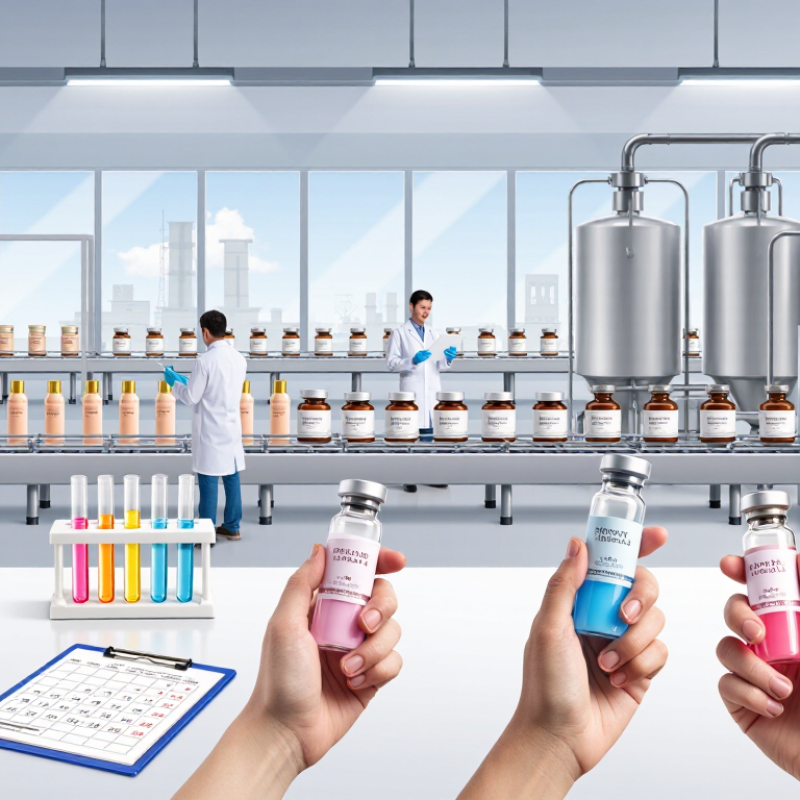
10 Tips for Choosing a Private Label Cosmetics Supplier?

Define Your Product, Market, and Manufacturing Requirements

Before contacting a private label cosmetics supplier, define the product in terms a formulator can test. Specify its format, intended use, desired skin feel, fragrance preference, key ingredients, and planned claims. “Light lotion” is vague. Describe whether it should absorb quickly, leave a satin finish, and dispense through a pump. A target texture, packaging size, and any preferred pH range can reduce avoidable sample rounds. Keep room for adjustment; some ingredients or packaging choices may change how the product feels.

Your market matters as much as the formula. List the countries or regions where you plan to sell, your customer group, expected price point, and sales channel. Ask what safety documents, ingredient records, stability testing, and labeling support the supplier can provide for those markets, then confirm requirements with qualified local professionals. Set realistic manufacturing needs: opening order quantity, repeat-order volume, lead time, customization, and packaging sourcing. Details still slip. A low minimum order may come with fewer packaging choices. Request written answers, sample timelines, and clear terms for formula changes. A polished sample does not prove consistent production, so ask how batches are checked and how specification deviations are handled.

10 Tips for Choosing a Private Label Cosmetics Supplier

Define your product, market, and manufacturing requirements before comparing suppliers.

This illustrative planning worksheet rates how clearly a buyer has defined each requirement, from 0 (not defined) to 5 (clearly defined). Use it to identify gaps in your product brief before requesting supplier quotes; scores are not industry benchmarks.

Assess Supplier Expertise, Capacity, and Customization Options

A private label cosmetics supplier should understand the product category you plan to sell, not just offer a long catalog. Ask which formulas they have made before and request relevant samples, stability results, and packaging compatibility information. A cream that looks smooth in a jar may separate after weeks of heat or react with its pump. Ask for evidence. Clear answers matter more than polished sales language.

Check whether the supplier’s capacity matches your launch plan and future demand. Discuss minimum order quantities, typical lead times, available production lines, and quality checks for each batch. Ask how they handle delays or a sudden increase in orders. A small pilot run can reveal practical issues before a larger commitment. Details matter. Still, a capacity estimate is only useful if it reflects your actual product and packaging; a general brochure may not tell the whole story.

Customization can include formula texture, scent, color, bottle shape, label placement, and carton finish. Ask which changes are feasible, how many sample rounds are included, and what each revision may cost. Request a written timeline, since custom components can take longer than expected. I would not assume every option is worth pursuing: extra choices can complicate production. A slightly imperfect sample is also a prompt to ask better questions, not a reason to approve it without review.

Verify Ingredient Safety, Certifications, and Regulatory Compliance

Before approving a private label cosmetics supplier, ask for current ingredient specifications, safety data sheets, and batch-specific certificates of analysis. Check that ingredient names and concentrations match the formula documents, and ask how the supplier manages substitutions. A small change can affect skin tolerance or product stability. Paper can look convincing.

For each ingredient, review available safety assessments and relevant test data, including irritation or stability results where appropriate. Confirm that testing covers the intended product type and use, not just a similar formula. Ask who performed the tests, when they were completed, and whether reports can be independently verified. If the supplier relies on a generic document, request a product-specific explanation. Details matter.

Check certifications directly with the issuing organization, and confirm their scope, site, and validity dates. A certificate for one facility may not cover the factory making your product. Request evidence of manufacturing controls, traceability, and complaint handling. Then compare the formula, label information, and supplier records against the rules in each market where you plan to sell. Requirements vary and can change. I would pause if answers are vague; I have seen tidy paperwork leave practical questions unanswered. Verify before production.

10 Tips for Choosing a Private Label Cosmetics Supplier? - Verify Ingredient Safety, Certifications, and Regulatory Compliance

# What to Check Evidence to Request Why It Matters
1 Ingredient safety and suitability A complete formula or ingredient list using appropriate ingredient names; safety assessments or supporting data for the intended product, use, and target users. Ingredient suitability depends on factors such as concentration, exposure, product type, and intended use. Confirm that safety is assessed for the finished formula, not inferred from individual ingredients alone.
2 Regulatory status of ingredients A regulatory review for each intended sales market, including checks against applicable restricted, prohibited, and permitted colorant lists. Ingredient rules vary by market and product category. For example, the EU Cosmetics Regulation includes ingredient restrictions and specific rules for colorants; requirements should be checked against current legislation.
3 Good manufacturing practices A description of the quality system, manufacturing procedures, hygiene controls, training records, and any independent audit reports or relevant ISO 22716 documentation. ISO 22716 provides guidance on good manufacturing practices for cosmetics. It is not a blanket product approval, so verify the scope and status of any claimed certification or audit.
4 Market-specific regulatory responsibilities A written responsibility map identifying who handles product safety documentation, notifications or listings, labeling review, and regulatory communication in each destination market. Requirements differ by jurisdiction. In the EU, cosmetics generally require an EU Responsible Person, a Product Information File, a Cosmetic Product Safety Report, and CPNP notification before being placed on the market. In the United States, MoCRA includes facility registration and product listing requirements, subject to applicable exemptions.
5 Safety substantiation and product testing Relevant test reports and rationale, which may include stability, packaging compatibility, microbiological quality, or preservative effectiveness testing, depending on the formula and product risk. Testing needs depend on product characteristics and use. Ask for reports tied to the actual formula and packaging, and confirm that conclusions support the product’s intended shelf life and conditions of use.
6 Ingredient and batch traceability Supplier qualification records, raw-material specifications, batch records, lot coding procedures, and a documented process for investigating and recalling affected products. Traceability helps identify affected materials and finished-product batches if a quality issue or safety concern occurs. Check how long records are retained and how quickly batch information can be retrieved.
7 Certificates and test documents Current, product- or site-relevant documents such as certificates of analysis, safety data sheets where applicable, and audit or certification records. Verify issuer, scope, dates, and covered location. A certificate or test report is useful only when it applies to the relevant material, product, facility, and production period. Do not treat a generic document as proof of complete regulatory compliance.
8 Labeling and ingredient declarations A market-specific label review covering ingredient declaration, product identity, net contents, responsible-party details, warnings where required, and language requirements. Cosmetics labeling rules differ across markets. Obtain final artwork review before production and confirm that the declared ingredients match the approved formula and applicable naming rules.
9 Claims and supporting evidence A claims review and evidence file for statements on labels, websites, and advertising, including the precise wording and the product or study data supporting it. Claims must be truthful and adequately supported. In the United States, claims that a product treats or prevents disease or affects the structure or function of the body may cause it to be regulated as a drug, depending on the claim and context.
10 Complaints and adverse-event handling Written procedures for receiving, documenting, escalating, and investigating complaints and adverse events, plus clear contractual responsibilities for reporting and record retention. A reliable process supports prompt investigation and follow-up. Under U.S. MoCRA, the responsible person has serious adverse event reporting and related recordkeeping obligations; confirm how the supplier will support the responsible person.

Regulatory requirements depend on the product and the markets where it will be sold. Confirm current local requirements with a qualified regulatory professional before launch.

Evaluate Quality Controls, Samples, Pricing, and Contract Terms

A dependable private label cosmetics supplier should explain its quality controls in specific, verifiable terms. Ask how ingredients are checked, batches are recorded, and finished products are tested for stability and microbial quality. Request sample test reports and examples of inspection records, with sensitive details removed if needed. Vague assurances are not enough.

Get samples that match the proposed formula, packaging, and production process as closely as possible. Check texture, scent, color, and how the product dispenses from its container. Store samples under different conditions and watch for separation, leakage, or changes in smell. Small details matter. A sample can still differ from a full production run, so ask whether a pilot batch is available. Keep an approved sample as a reference, though it may not catch every issue.

Compare written quotes line by line. Include setup fees, minimum order quantities, packaging, testing, shipping, and revision costs. An unusually low price deserves careful questions. Contract terms should cover specifications, delivery dates, payment milestones, defect handling, and supplier notice before formula or packaging changes. Clarify who owns custom materials and how either party can end the agreement. A spreadsheet will not reveal every risk; have a qualified professional review unclear terms before signing.

Compare Communication and Support Before Choosing a Supplier

Communication is part of product quality when choosing a private label cosmetics supplier. Ask who will handle your account after the sales discussions. A polished sales call proves little. The person answering questions about a delayed sample may be someone else entirely.

Test the process with specific questions about ingredient documents, packaging changes, and sample revisions. Notice whether replies address each point or simply promise to follow up. A clear answer should name the next step and a realistic time frame. Even a detailed questionnaire can feel awkward, but vague answers are harder to fix later. Keep important decisions in writing.

Support matters when plans shift. Ask how urgent issues are escalated, who reviews quality concerns, and whether progress updates continue during production. Request a sample timeline with checkpoints, not just an estimated ship date. If a response takes two days, ask whether that is typical. Small delays happen. Silence is different. Compare how patiently each supplier explains limits; dependable support includes honest boundaries, not constant agreement. Notice whether the same contact remains available when a request becomes inconvenient.

FAQS

What documents should I request before approving a cosmetics supplier?

Request current ingredient specifications, safety data sheets, and batch-specific certificates of analysis. Check that names and concentrations match the formula. Paper can mislead.

How can I check whether ingredient safety testing is relevant?

Ask for irritation or stability results that cover your product type and intended use. Confirm who performed each test and when. Generic reports need explanation.

How should I verify a supplier’s certifications?

Contact the issuing organization to confirm the certificate’s scope, facility, and validity dates. One site’s certificate may not cover another production location.

What quality-control records are useful to review?

Ask how ingredients are checked, batches are recorded, and finished products are tested. Request sample test reports and inspection records, with sensitive details removed if needed.

What should I inspect in a product sample?

Check its texture, scent, color, and dispenser. Store it under different conditions and watch for separation, leaks, or odor changes. Small details matter.

Can a sample guarantee the full production run will match?

No. Ask whether a pilot batch is available, and keep an approved sample as a reference. It may still miss problems. I would not rely on it alone.

What costs and contract terms should I compare?

Compare setup fees, order minimums, packaging, testing, shipping, and revision costs. Contracts should cover specifications, delivery, defects, payment, and changes. Get unclear terms reviewed.

How can I assess a supplier’s communication and support?

Ask who handles your account and how urgent quality concerns are escalated. Request timeline checkpoints and written updates. Silence is different.

What does dependable support look like when plans change?

Look for clear next steps, realistic time frames, and honest limits. Notice whether the same contact stays available when requests become inconvenient. That is worth reflecting on.

Conclusion

Choosing the right Private Label Cosmetics supplier begins with a clear understanding of your product concept, target market, budget, and production needs. Define the formulas, packaging, order volume, and level of customization you expect before comparing potential partners. Then assess each supplier’s relevant experience, manufacturing capacity, ability to support your specifications, and readiness to grow with your business.

Before making a decision, review ingredient information, safety practices, applicable certifications, and regulatory compliance for the markets you plan to serve. Request samples to evaluate product quality, and examine quality-control procedures, pricing, minimum order quantities, lead times, and contract terms. Finally, consider how clearly and promptly the supplier communicates and what support it provides throughout development and production. A careful, balanced evaluation can help you choose a dependable partner and avoid surprises as your product moves from concept to market.

Amelia

Amelia

Amelia is a dedicated professional marketer with a strong understanding of product strategy, customer needs, and digital communication. As a regular contributor to our company website, she creates informative and practical blog articles that help readers better understand our solutions, industry......