Engineered with 100% pure plant vegetable waxes, non-toxic cotton/wooden wicks, and IFRA-conform scents under strict European Quality Directives.
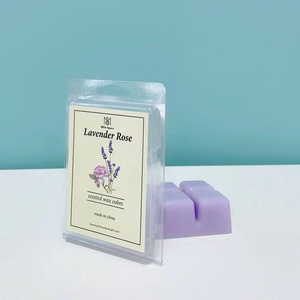
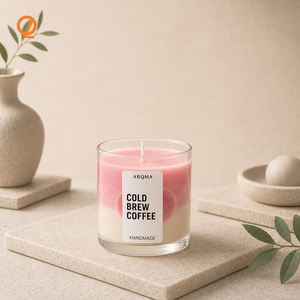
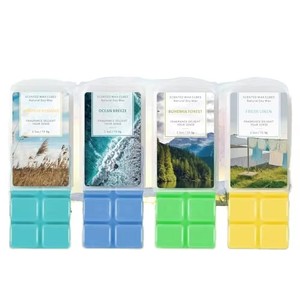
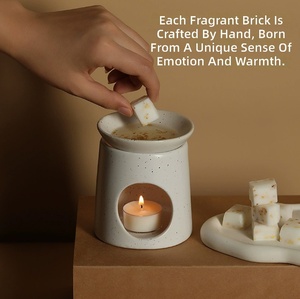
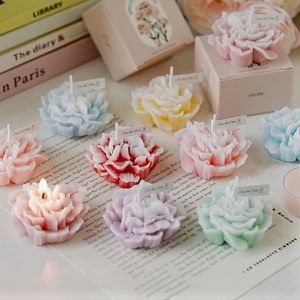
Decoding the chemical dynamics of organic wax matrixes, thermal burn equilibrium, and European regulatory compliance for OEM brand owners.
Pure vegetable waxes—specifically non-GMO soy and cold-pressed rapeseed—naturally suffer from polymorphism ("frosting" or surface cracking) when combined with fragrance oils. Our proprietary multi-stage thermal annealing process controls crystal lattice formation during cooling. This yields a flawless satin surface finish without requiring synthetic paraffin additives or microcrystalline petro-waxes.
We provide full-scope European chemical agency compliance support. Every batch manufactured is backed by CLP (Classification, Labelling and Packaging Regulation EC 1272/2008) notifications, Safety Data Sheets (SDS) in 24 languages, IFRA 51st Amendment certificates, and Cosmetic Product Safety Reports (CPSR) under EC 1223/2009 for massage candles.
Collaborating directly with master perfumers in Grasse, France, we engineer complex olfactory pyramids (Top, Heart, Base notes) calibrated specifically for cold and hot scent throw performance in organic wax matrixes. Our fragrances use bio-fixatives to prevent scent flash-off during high-temperature filling phases.
| Evaluation Parameter | CE Certified Organic Soy/Rapeseed Matrix | Standard Industrial Paraffin Wax | OEM Brand Business Impact |
|---|---|---|---|
| Combustion Soot Emission (EN 15492) | Near-Zero (<0.05 / hour soot index) | High (0.4 - 1.2 / hour soot index) | Eliminates wall staining & health liability claims |
| Fragrance Load Capacity | 8% – 12% (Optimized with bio-emulsifiers) | 4% – 6% (Fragrance oil sweating risk) | Delivers luxury-level hot scent throw (HT) |
| Indoor Air Quality (IAQ) Impact | Zero VOCs, Phthalate-Free, Lead-Free Wick | Releases Benzene, Toluene, Alkanes | Unlocks Clean Beauty & Eco-Retail Channels |
| Melting Pool Dynamics | Even, wall-to-wall burn without tunneling | Rapid center-bore melting (Tunneling) | Extends product total burn life by +35% |
| Carbon Footprint & Traceability | 100% Renewable EU Bio-Agriculture | Petroleum Refining Byproduct | Satisfies ESG & Scope 3 Corporate Mandates |
How shifting consumer wellness expectations, carbon border adjustments, and regulatory tightening are reshaping global home fragrance supply chains.
The global market for scented candles and home aromatherapy is undergoing a fundamental structural transition. Procurement directors, retail buyers, and private label brand architects can no longer rely on legacy candle contract manufacturing methods. Driven by strict enforcement of European Chemical Agency (ECHA) standards and shifting consumer preferences in North America and Asia-Pacific, global procurement is consolidating around three core pillars: absolute non-toxicity, verifiable bio-origin tracing, and circular packaging integration.
While soy wax historically dominated the natural candle market, global sourcing buyers are rapidly transitioning to European-grown Rapeseed and Sunflower wax matrixes. Sourcing soy wax from South America carries deforestation risk metrics that conflict with EU Corporate Sustainability Due Diligence Directives (CSDDD). Rapeseed wax, cultivated within Europe, offers a lower carbon transport footprint, superior cold scent throw, and a creamier aesthetic finish. OEM manufacturers capable of producing custom rapeseed-coconut formulations are winning long-term private label tenders over traditional soy-only producers.
Regulatory scrutiny over indoor air pollutants is reaching an all-time peak. Future procurement contracts will explicitly require third-party laboratory verification for Volatile Organic Compound (VOC) emissions during burning. Candles that emit formaldehydes, acrolein, or heavy-metal wick particulate will be systematically barred from tier-one department stores and boutique wellness outlets. CE certification in candle manufacturing is no longer just a labeling formality; it requires full compliance with EN 15493 (Fire Safety Standard), EN 15494 (Product Safety Labels), and EN 15492 (Soot Emission Behavior).
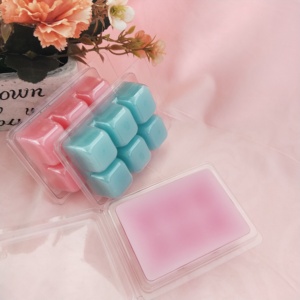
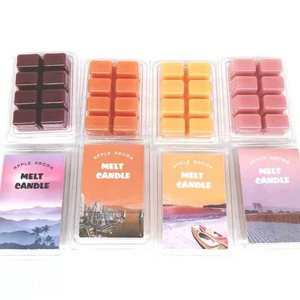
Heavy glass candle vessels generate substantial shipping weight, ballooning international freight costs and Scope 3 carbon emissions. Consequently, procurement volume is surging toward wax melts, wax cubes, and vessel refill inserts. Brands are ordering high-density scented wax cubes wrapped in biodegradable post-consumer recycled (PCR) clamshells or compostable paperboard. This allows end consumers to retain luxury ceramic vessels while purchasing recurring monthly wax cube refills—shifting the commercial business model from single-sale containers to high-margin subscription models.
Exploring the intersection of botanical scent chemistry, acoustic wood-wick physics, and precision thermal pouring engineering.
Traditional natural waxes experience slow fragrance evaporation ("sweating") during warehouse storage in hot climates. Our R&D lab has engineered bio-based micro-encapsulated fragrance carriers that trap volatile essential oils inside the wax matrix until thermal activation occurs upon melting. This guarantees a 24-month shelf life without scent decay.
Wooden wicks provide an acoustic, ambient customer experience but frequently suffer from inconsistent flame height and self-extinguishment in natural wax. Our engineered wood wicks undergo hydro-thermal treatment and natural oil priming to ensure an even melt pool diameter across wide vessel geometries without carbon buildup ("mushrooming").
Merging home fragrance with skin treatment, our dermatologically tested massage candles use a specialized blend of low-melting-point (38°C–40°C) hydrogenated plant oils, Shea butter, and Vitamin E. When burned, the liquid wax pool transforms into a luxurious, non-comedogenic skin massage oil compliant with EU Cosmetic Regulation EC 1223/2009.
Comprehensive technical and commercial answers tailored for brand managers, procurement heads, and quality assurance teams.
While CE marking traditionally applies to machinery and electronics, in the home fragrance and candle sector, a "CE Certified Manufacturer" operates under strict European Union Harmonized Safety Standards. This confirms full operational compliance with EN 15493 (Flame & Fire Safety), EN 15494 (Consumer Warning Labels), EN 15492 (Soot Index & Indoor Air Quality), alongside REACH Annex XVII restrictions on hazardous chemical substances. For organic credentials, it verifies that raw vegetable waxes originate from certified non-GMO, pesticide-free botanical harvests.
Pure vegetable waxes possess a tighter crystal structure than paraffin, making it difficult to bind high concentrations of essential and synthetic fragrance oils. We solve this through proprietary blend optimization: combining hydrogenated soy wax with low-viscosity rapeseed and botanical emulsifiers. Furthermore, our filling lines utilize dual-stage vacuum temperature control, pouring at the exact crystallization curve (52°C ± 1.5°C) to lock scent molecules uniformly within the solidifying wax matrix.
Our standard OEM/ODM production runs start at 500 units per fragrance reference for custom glass candles or wax melts, and 1,000 units for fully bespoke custom-molded ceramic vessels. Scent development, sampling, and lab testing typically require 3 to 4 weeks. Once artwork and technical files are signed off, industrial manufacturing and assembly are completed within 4 to 6 weeks, backed by EXW, FOB, DAP, or DDP international shipping terms.
Every commercial production run includes a complete regulatory documentation binder: Safety Data Sheets (SDS) compliant with GHS and CLP directives, IFRA Certificates of Conformity, Allergen Declaration statements listing all 26 EU regulated perfume allergens, Batch Production Records with lot traceability, and EN 15493 fire safety test reports from accredited testing laboratories.
Yes. We specialize in formulate-and-pour cosmetic candles. These products are classified as cosmetic items under European Regulation (EC) No 1223/2009. We conduct full dermatological patch testing, microbiological challenge testing, and compile the official Cosmetic Product Safety Report (CPSR) authored by a certified European toxicologist, accompanied by CPNP (Cosmetic Products Notification Portal) registration.
From initial concept scent brief to automated mass filling and export logistics—your trusted European candle manufacturing partner.
Work directly with perfumers trained in Grasse to refine exclusive brand signatures. We match target price points while preserving olfactory diffusion performance, complexity, and stability.
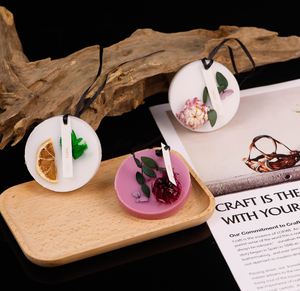
Our dual production facility handles large-scale automated multi-wick filling alongside delicate hand-poured artisanal collections featuring botanical decorations, custom wax seals, and complex vessel geometry.
Every lot undergoes 100% burn-room testing under controlled atmospheric conditions. We verify flame stability, wick self-trimming performance, vessel wall thermal thresholds, and cold/hot scent throw intensity.
Request our complete 2025 product catalog, sample box, and technical formulation portfolio. Our OEM engineering team is ready to analyze your brief.
Get Catalog