

Whitepaper: The Strategic Landscape of CE Certified Perfume Oil Manufacturing
In the global home fragrance, personal care, and ambient aromatherapy sectors, securing a reliable supply chain backed by rigorous regulatory compliance is no longer a luxury—it is an absolute market prerequisite. B2B importers, brand owners, and procurement directors looking for CE Certified Perfume Oil Manufacturers & Factories face a landscape defined by evolving chemical safety regulations, intricate international trade directives, and increasingly sophisticated consumer expectations regarding olfactory longevity, non-toxicity, and ethical sourcing.
This technical guide examines the critical engineering, regulatory compliance, quality control, and procurement frameworks required when selecting an OEM/ODM manufacturing partner for perfume oils, custom scented candles, reed diffusers, and cosmetic-grade body fragrances. By bridging French fine-fragrance expertise with stringent ISO 22716 Good Manufacturing Practice (GMP) principles, professional factories provide the operational foundation necessary to launch and scale luxury scent collections worldwide.
What Does "CE Certified" Mean for Perfume Oils & Fragrance Factories?
While CE marking traditionally applies to electrical equipment and medical devices under European Directives, in the chemical, fragrance, and cosmetic manufacturing ecosystem, "CE Compliance" serves as a benchmark for compliance with the overarching European Union Consumer Safety Framework. This encompasses adherence to EU Regulation (EC) No 1223/2009 for Cosmetics, CLP Classification (EC No 1272/2008), REACH (EC No 1907/2006) chemical safety evaluations, and the strict safety guidelines promulgated by the International Fragrance Association (IFRA).
1. The Technical Architecture of High-Performance Perfume Oils
Industrial perfume oils are complex multi-component mixtures of natural essential oils, aromatic isolates, and synthesized fragrance compounds dissolved in carefully chosen carrier solvents. Unlike off-the-shelf essential oils, concentrated perfume oils engineered for commercial applications (such as candle pouring, reed diffusers, cosmetic body oils, and fine perfumery) must fulfill distinct physical and thermal parameters:
- Thermal Degradation Thresholds: For wax melt and candle manufacturing, perfume oils must maintain olfactory stability when exposed to temperatures exceeding 70°C–85°C during hot-pour filling cycles. Fragrance molecules with low boiling points can flash off prematurely if the formulation lacks thermal fixatives.
- Flash Point Verification: Determining the precise flash point via closed-cup flash testing (Pensky-Martens closed cup method) is vital for international shipping logistics, air transport safety classification, and consumer safety label compliance under ADR hazardous goods regulations.
- Cold vs. Hot Scent Throw Dynamics: A masterfully blended perfume oil utilizes specific top, heart, and base note ratios to ensure that volatile top notes diffuse pleasantly at ambient room temperature (cold throw) while heavy resins, woods, and musks volatilize evenly when heat is applied (hot throw).
- Viscosity & Capillary Action: In reed diffuser applications, perfume oils are combined with low-VOC, alcohol-free diffuser bases (such as DMM or Augeo Clean Multi) to ensure steady capillary lift through porous synthetic or rattan reeds without clogging or phase separation over 8-12 weeks.
GC-MS Analytics & Batch Traceability
Top-tier perfume oil factories employ Gas Chromatography-Mass Spectrometry (GC-MS) analysis for every batch of raw fragrance incoming from distillers. GC-MS testing creates a chemical fingerprint of the oil, confirming that peak intensities align precisely with approved master samples. This scientific rigor eliminates batch-to-batch color shifts, fragrance distortion, and allergen concentration spikes, protecting brands against costly product recalls or customer dissatisfaction.
Technical Specification Comparison Matrix
When evaluating contract manufacturers, procurement managers must distinguish between basic commercial fragrance suppliers and fully audited, regulatory-compliant manufacturing facilities.
| Evaluation Parameter | Certified Contract Manufacturer | Standard OEM Supplier | Impact on Brand Safety & Scaling |
|---|---|---|---|
| Regulatory Dossier | Full CPSR, SDS (16-Point), CPNP, IFRA 51st | Basic Safety Data Sheet (SDS) only | Guarantees legal entry into EU, UK, US & Asian luxury retail chains. |
| Quality Testing | GC-MS, Viscosity, Flash Point, Stability | Visual & basic olfactory check | Prevents batch separation, discoloration, and rapid fragrance decay. |
| Skin-Contact Safety | Dermatologically Tested / Cosmetic Grade | Industrial/Technical Grade | Essential for massage candles, solid perfumes, and body fragrance oil sprays. |
| Carrier System | Eco-friendly, Low-VOC, Phthalate-Free | Solvent-heavy (DEP / DPG high ratios) | Delivers clean-burning, non-toxic positioning demanded by modern consumers. |
| Supply Chain Traceability | Complete Batch Records & Sample Archiving | Limited batch tracking | Ensures instant auditability in the event of regulatory inquiries. |
2. Future Procurement Trends in Industrial Fragrance & Perfume Oils (2025–2030)
As global environmental regulations tighten and consumer awareness regarding indoor air quality grows, procurement strategies for perfume oils and home fragrance lines are undergoing a structural transformation. Forward-thinking buyers are prioritizing manufacturers that offer technical innovations in the following four areas:
Trend 1: Transition to Upcycled & Biotech Aromatics
Traditional sourcing of natural essential oils faces supply chain vulnerabilities driven by climate fluctuations, land scarcity, and fluctuating agricultural yields. Advanced perfume oil factories are increasingly integrating upcycled aromatic materials—ingredients derived from agricultural side-streams (e.g., spent rose petals, upcycled cedarwood sawdust, and citrus peel extracts)—alongside white-biotech synthesized aroma molecules. These ingredients drastically lower carbon footprints while delivering unmatched olfactory consistency.
Trend 2: Phthalate-Free & Low-VOC Solvent Matrices
Regulatory authorities in California (Prop 65) and the European Chemicals Agency (ECHA) are continuing to restrict volatile organic compounds (VOCs) and traditional fragrance solubilizers like Diethyl Phthalate (DEP). Modern perfume oil manufacturing focuses on formulating concentrated oils in bio-based, biodegradable carriers such as triethyl citrate, soybean methyl esters, and renewable hydrogenated isoparaffins, facilitating non-toxic labeling claims for end consumers.
Trend 3: Micro-Encapsulation & Controlled-Release Technologies
Commercial clients operating in the hospitality, architectural scenting, and laundry care spaces demand scent solutions that persist long after initial application. Polymer and silica micro-encapsulation techniques allow perfume oils to remain latent until activated by friction, heat, or ambient humidity, extending active fragrance life by up to 300% compared to unencapsulated oils.
Trend 4: Digital Product Passports (DPP) & Full Sourcing Transparency
Under upcoming European Commission sustainability directives, consumer products will soon require digital product passports outlining raw material origin, carbon footprint, and toxicological profiles. Partnering with a manufacturer capable of providing full supply-chain transparency down to the raw harvest site or chemical synthesis facility ensures long-term compliance with future European trade mandates.
3. Product Development Trends: Formulating for Modern Lifestyle Universes
Today’s scent collections extend far beyond traditional liquid perfumes. Successful private-label brands build cohesive, multi-category scent universes where one master fragrance profile is adapted across diverse product substrates. A specialized manufacturer must understand the distinct formulation kinetics of each medium:
A. Vegetable Wax Melts & Scented Candles
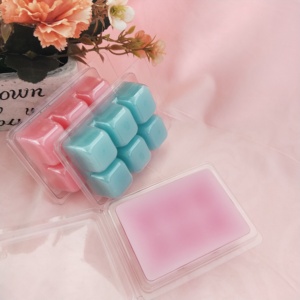
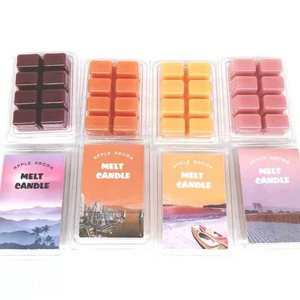
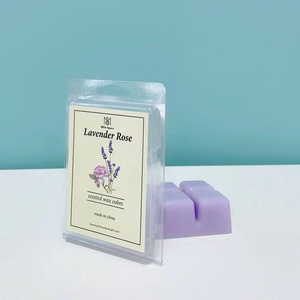
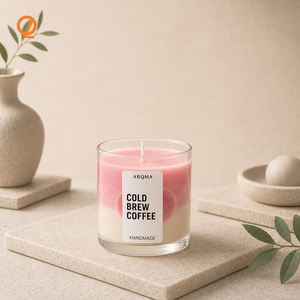
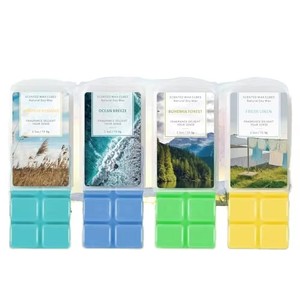
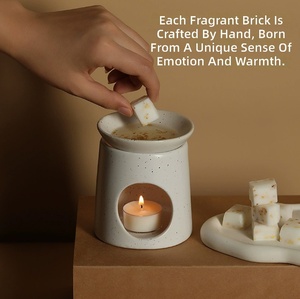
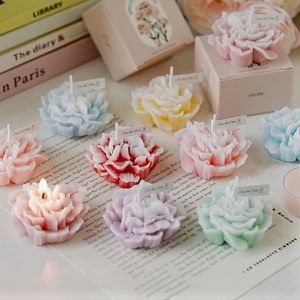
Formulating perfume oils for vegetable wax systems (soy wax, rapeseed wax, coconut wax, beeswax) requires managing wax-oil compatibility. Natural waxes feature complex triglyceride structures that hold fragrance oils differently than synthetic paraffin. Perfume oils must be engineered with specific emulsifying agents to prevent "sweating" (oil migration to the surface) during temperature fluctuations, while maximizing the percentage payload (typically 6% to 12% scent load).
B. Cosmetic Massage & Body Care Candles
Dual-purpose massage candles represent a high-growth wellness category requiring cosmetic-grade safety protocols. The underlying perfume oil must be formulated entirely with skin-safe, non-phototoxic ingredients that meet strict IFRA Category 5A guidelines. Combined with low-melting-point natural plant oils (such as shea butter, jojoba oil, and sweet almond butter), the melted wax pool acts as a warm, nourishing massage oil at a skin-safe temperature (38°C–42°C).
C. Alcohol-Free Solid Perfumes & Aromatherapy Balms
Solid perfumes in compact tin packaging or twist-up sticks offer leak-proof, travel-friendly alternatives to traditional alcohol sprays. Formulated using hydrogenated plant oils, beeswax, and concentrated perfume oil bases, solid perfumes demand high oxidative stability to prevent the carrier oils from turning rancid over time. Antioxidants like Tocopherol (Vitamin E) are integrated directly into the oil matrix during high-shear liquid blending.
D. High-Diffusion Reed Diffusers & Room Sprays
Ambient diffusion requires balancing volatility and surface tension. Room sprays require ultrafine atomization nozzle compatibility to avoid oily droplets staining soft furnishings or flooring. Reed diffusers require non-evaporating, non-clogging bases that sustain constant ambient throw across ambient room sizes ranging from 15 to 50 square meters.
4. Strategic Sourcing Framework: Auditing a Perfume Oil Manufacturer
To mitigate supply chain risks and ensure product integrity, B2B procurement managers should apply a rigorous four-step audit process when qualifying new manufacturing partners:
- Documentation Verification: Request current, batch-specific Safety Data Sheets (SDS) in GHS/CLP format, IFRA Certificates of Conformity (specifying maximum usage percentages across all 12 IFRA product categories), and Allergen Declarations listing the 26 EU-regulated fragrance allergens (and upcoming 56 expanded allergens).
- Stability & Compatibility Testing: Before approving mass production, conduct accelerated aging tests (exposing sample candles or diffusers to 40°C at 75% relative humidity for 12 weeks) to monitor color shifts, precipitation, and fragrance degradation.
- Regulatory Submission Capabilities: Verify whether the manufacturer offers in-house regulatory management, including preparation of Cosmetic Product Safety Reports (CPSR) signed by a certified European toxicologist and direct CPNP portal uploading.
- Facility Infrastructure & Production Capacity: Audit the physical factory for ISO 22716 certification, automated liquid filling lines, stainless steel mixing vessels, climate-controlled raw material storage, and batch retention sample archives.