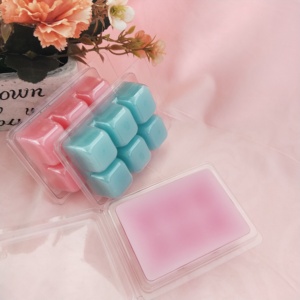
Customized Fragrance Wax Cube Fragrance Wax Melt
- Material: 100% Soy Wax Blend
- Scent Load: 8% - 12% Concentrated Oils
- Compliance: REACH / IFRA / CLP
- MOQ: 1,000 Packs
Direct-from-factory turnkey solutions engineering premium plant waxes, therapeutic-grade essential oils, and high-throw fragrance formulations for global brands.

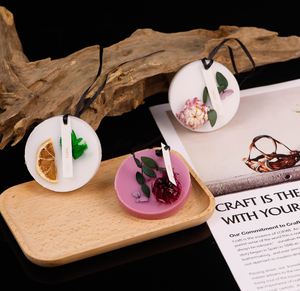
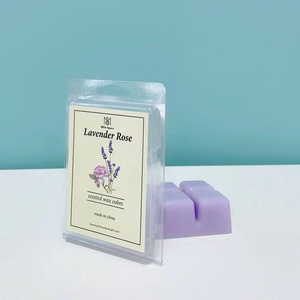
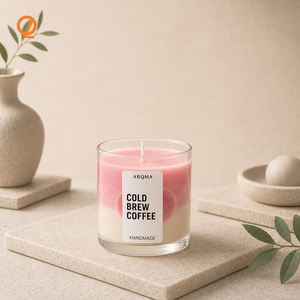
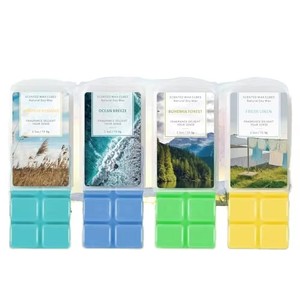
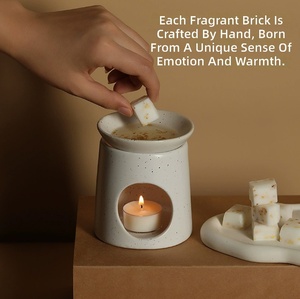
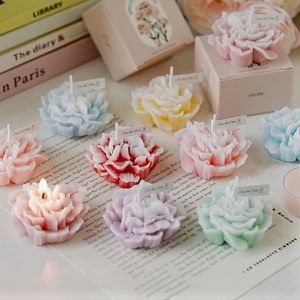
The global home fragrance sector has undergone a profound structural evolution. Driven by shifting consumer preferences toward wellness, interior aesthetics, and clean-label luxury, international brands are demanding unprecedented levels of technical precision from their manufacturing partners. China has consolidated its leadership as the world's primary manufacturing hub for home fragrance products, transitioning from mass commodity assembly to sophisticated, value-added OEM/ODM research and development.
Leading Chinese home fragrance factories leverage vertically integrated supply chains, automated temperature-controlled wax pouring lines, precise automated wick centering systems, and analytical chemistry laboratories equipped with Gas Chromatography-Mass Spectrometry (GC-MS). This infrastructure ensures that global beauty houses, niche boutique labels, and multinational retail conglomerates achieve strict batch-to-batch consistency, prolonged scent throw performance, and full compliance with stringent international chemical frameworks such as EU CLP, REACH, and US CARB regulations.
"In modern OEM home fragrance manufacturing, scent performance is governed by physical chemistry. Harmonizing wax crystallization rates, capillary wick draw, and volatile organic compound (VOC) flashpoints separates premier exporters from traditional candle pourers."
By establishing strategic manufacturing alliances with tier-one Chinese factories, international buyers benefit from high economies of scale, rapid product prototyping cycles (often reduced to 10–14 days), and flexible minimum order quantities (MOQs) tailored for both market testing and global retail distribution.
Achieving superior scent throw—both cold throw (scent emission at room temperature) and hot throw (fragrance release during combustion or thermal liquefaction)—requires deep mastery of substrate chemistry. Top China fragrance factories formulate proprietary wax matrices designed to balance structural integrity with optimal fragrance holding capacity.
Utilizing 100% natural soy wax, coconut wax, rapeseed wax, and ethically sourced beeswax. Plant waxes feature micro-crystalline structures that allow fragrance oil loading ratios of 8% to 12% without oil sweating, phase separation, or surface frosting.
Eliminating hazardous Glycol Ether DPM solvents in favor of eco-friendly, low-VOC carrier bases such as Augeo Clean Multi or Dowanol DPM. This yields uniform evaporation rates, extended diffusion longevity (up to 90 days for 100ml), and non-clogging performance across rattan and synthetic fiber reeds.
To assist brand procurement teams in selecting the appropriate medium for their product positioning, our engineering labs have compiled the following technical evaluation matrix:
| Wax / Carrier Substrate | Melting Point Range | Max Fragrance Load | Cold / Hot Throw Rating | Eco & Clean Label Status |
|---|---|---|---|---|
| Pure Soy Wax (C-3 Grade) | 45°C - 48°C | 8% - 10% | Excellent Cold / High Hot | 100% Plant-Based, Biodegradable |
| Coconut-Soy Hybrid Blend | 38°C - 42°C | 10% - 12% | Superior Cold / Superior Hot | Ultra-Clean Burn, Zero Frosting |
| Beeswax Enhanced Compound | 61°C - 65°C | 6% - 8% | Moderate Cold / High Hot | Natural Air Purifying (Negative Ions) |
| Augeo Reed Diffuser Base | N/A (Liquid Solvent) | 15% - 25% Oils | Linear 90-Day Constant Throw | Low Carbon Footprint, Non-Toxic VOC |
As consumer vigilance regarding indoor air quality and ethical supply chains intensifies, global procurement teams must align with factories capable of fulfilling tomorrow's regulatory and aesthetic demands. China's top exporters are pioneering four core macro-trends:
Integration of encapsulated fragrance technologies into solid wax melts and candles. Scent molecules remain locked within protective shells until heat triggers controlled release, extending product shelf-life during warehousing and international freight up to 24 months without scent degradation.
Replacing standard PET/PVC thermoformed wax melt packaging with bio-based PLA (Polylactic Acid) and molded sugarcane bagasse containers. Exporters now offer 100% home-compostable packaging formats without compromising moisture barrier protection.
Transitioning from pure olfactory decoration to neuro-sensory functional fragrances. Formulations are enriched with essential oil blends proven via EEG testing to promote sleep hygiene, stress reduction, or cognitive focus, accompanied by clinical testing documentation.
Implementation of AI vision inspection systems on filling lines to detect surface irregularities, wick tilt variances greater than 0.5mm, and fill-level discrepancies in real time, drastically eliminating human oversight errors in high-volume export runs.
Navigating international regulatory frameworks is a critical risk-management mandate for brand directors. A product recalled due to heavy metal wick contamination, high soot emissions, or missing CLP hazard pictograms can severely damage brand equity. Leading Chinese manufacturing partners operate under standardized regulatory control protocols:
Operational procedures certified under Cosmetic Good Manufacturing Practices, ensuring cleanroom pouring environments, total raw material traceability, and strict microbiological control.
All fragrance compounds are audited against the International Fragrance Association guidelines, ensuring safe limits for skin contact (massage candles) and atmospheric vapor diffusion.
Rigorous burn testing verifying soot index control, flame height safety, container surface temperatures, and self-extinguishing safety mechanisms.
Collaborating with an overseas manufacturing partner requires a structured development roadmap. China's top home fragrance factories streamline client onboarding through a standardized 6-stage engineering process:
Client submits fragrance briefs, target target costs, container vessel dimensions, and target retail markets. Master perfumers initiate scent matching or create custom bespoke accords within 5 business days.
Technicians calculate vessel thermal conductivity and pour lab samples to select the optimal wick caliber (cotton woven, paper-cored, or wooden cross-wick) to ensure a complete melt pool without tunneling.
Issuance of complete technical compliance files including Safety Data Sheets (SDS 16-section format), Classification, Labelling and Packaging (CLP) templates, Allergen Declarations, and CPSR documentation.
Sample batches undergo thermal stress chamber testing (45°C and -10°C thermal cycles for 14 days), light stability evaluations, and transport vibration testing to guarantee global transit durability.
Mass manufacturing commences utilizing multi-zone automated filling lines with integrated cooling tunnels to ensure uniform wax crystallization and pristine top-surface finishing.
Products are packed into drop-test certified outer cartons, temperature-controlled container loaded, and shipped under FOB, CIF, or DDP terms with full customs clearance support.
Direct answers to crucial technical, regulatory, and logistics queries for commercial buyers and brand managers.
For standard private label configurations using factory stock glass vessels or PET clamshell packaging, production runs start at 1,000 units per fragrance reference. For fully customized vessel shapes, custom Pantone-lacquered glass, or bespoke embossed gift box packaging, MOQ typically ranges between 3,000 to 5,000 units depending on component tooling requirements.
Premier factories partner with accredited third-party testing laboratories (such as SGS, Intertek, and BV) and maintain in-house regulatory divisions. Every fragrance oil formulation is screened against IFRA 51st Amendment standards. Exporters generate complete 16-section SDS documents, allergen breakdown matrices, and exact CLP warning label graphic layouts (including UFI codes for EU markets) prior to production sign-off.
Yes. Factory R&D centers utilize Gas Chromatography-Mass Spectrometry (GC-MS) reverse engineering to analyze scent profiles and replicate target olfactory notes. Alternatively, in-house perfumers formulate exclusive, proprietary accords based on client fragrance briefs, supplying complete top, heart, and base note olfactory pyramids for validation.
Frosting (polymorphism) and oil sweating are mitigated through precise botanical wax chemistry. Formulators blend pure soy wax with specialized hydrogenated coconut triglycerides and botanical emulsifiers that stabilize the crystal lattice. Furthermore, poured items undergo controlled, multi-stage cooling tunnels to establish stable crystal polymorphs before packaging in moisture-sealed cartons.
Fragrance matching and wax sampling generally require 7 to 12 working days. Once physical samples, artwork, and technical dossiers are signed off by the buyer, standard mass production lead times range from 30 to 45 calendar days, contingent upon vessel customisation complexity and raw material sourcing schedules.
Yes. Massage candles come into direct contact with human skin upon liquefaction and are classified as cosmetic products under EC Regulation No 1223/2009 and US FDA cosmetics rules. They must be manufactured within ISO 22716 / GMPC cleanroom environments, utilizing cosmetic-grade vegetable butters (such as Shea and Cocoa butter), dermatologically tested low-melting-point waxes (38°C–42°C), and certified Cosmetic Product Safety Reports (CPSR).
Elevate your brand with engineered scent throw, guaranteed regulatory compliance, and scalable OEM/ODM manufacturing capability. Request technical specifications, sample kits, or factory audit documentation today.