Explore our industrial catalog of customizable candle containers, private label wax melts, and luxury fragrance systems manufactured under strict EU compliance and French artisanal precision.
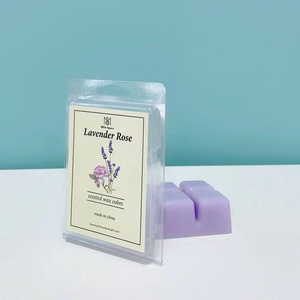
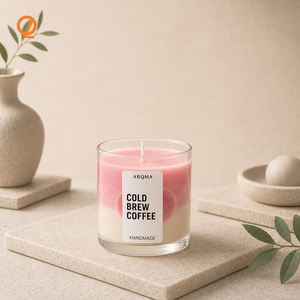
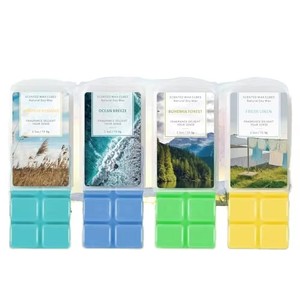
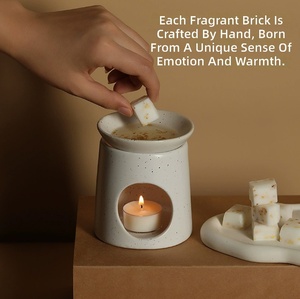
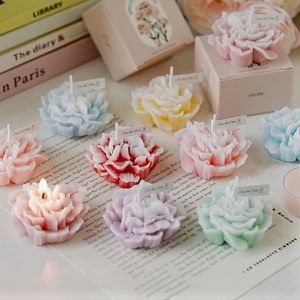
Engineered for high-volume commercial scaling and artisanal boutique luxury.
In the evolving home fragrance landscape, candle vessels are no longer passive containers; they are integral thermal management systems, aesthetic anchors, and environmental touchpoints. Procurement directors, brand founders, and product developers seeking the top 10 candle vessels manufacturer & suppliers must look beyond basic unit pricing. Evaluating suppliers requires analyzing glass stress tolerances, thermal expansion coefficients, surface tension during wax cooling, and chemical neutrality when holding high concentrations of fragrance oils.
The global candle market has entered a structural shift toward multi-use, luxury, and refillable vessel architectures. Today’s consumers demand seamless burning behavior paired with architectural vessel designs—ranging from mouth-blown heavy-base glass and electroplated metallic alloys to reactive glazed ceramics and tactile eco-concrete. Partnering with a manufacturer capable of integrating custom vessel engineering with precise wax formulation (such as rapeseed, soy, and coconut blends) is the single most critical factor in mitigating product liability, preventing container fracture, and securing brand equity.
Key Takeaway for B2B Buyers: A premium candle’s burn profile is determined by the thermodynamic synergy between vessel geometry, wick composition, and wax adhesion. Sourcing vessels without technical thermal shock testing leads to uneven melt pools, tunneling, soot deposition, or catastrophic vessel cracking under high burn durations.
When shortlisting primary suppliers, understanding the material physics of candle containers is vital. Each substrate presents distinct thermal conductivity values, surface adhesion parameters, and manufacturing tolerances:
| Vessel Substrate | Thermal Conductivity (W/m·K) | Max Recommended Fragrance Load | Primary Risk Factors | Optimal Wax Systems |
|---|---|---|---|---|
| Annealed Heavy-Base Glass | 0.9 – 1.1 | 10% – 12% | Thermal shock cracking if wall thickness is uneven | Soy / Rapeseed / Coconut Blends |
| High-Fired Glazed Ceramic | 1.5 – 2.5 | 8% – 10% | Micro-crazing allowing oil seepage over 6+ months | Beeswax & Mineral Wax Formulations |
| Anodized Metal / Tinplate | 15.0 – 200.0 | 6% – 8% | Rapid exterior heat build-up; potential surface scalding | Low Melting Point Vegetable Butters |
| Sealed Polymer Concrete | 0.3 – 0.5 | 8% – 10% | Inadequate seal leads to oil spotting on outer wall | Hydrogenated Soy & Palm-Free Waxes |
A global breakdown of leading manufacturing hubs, contract pouring specialists, and container engineering facilities.
Core Specialization: Turnkey Luxury Candle Manufacturing, Custom Glass Lacquering, & Grasse Fragrance Integration.
Key Advantages: European leader in private label home fragrances. Controls full end-to-end production—from bespoke vessel sourcing, Pantone lacquering, and silk-screening to cosmetic-grade wax pouring under ISO 22716 principles. Minimum order quantities starting from 500 units per run with complete EU regulatory documentation (CPSR, CPNP, CLP).
Core Specialization: Semi-Automatic Pressed Glass & High-Clarity Crystal Vessels.
Key Advantages: Renowned for high optical clarity, heavy glass bases, and sophisticated decorative spray finishing. Ideal for high-end European cosmetic and fragrance houses demanding premium weight and flawless rim geometry.
Core Specialization: Precision Molded Borosilicate & Technical Containers.
Key Advantages: Precision wall thickness control and extreme thermal shock resistance. German suppliers excel in high-speed automated filling line compatibility and ultra-tight dimensional tolerances.
Core Specialization: Hand-Thrown & Molded Reactive Glaze Stoneware Vessels.
Key Advantages: Unrivaled artistic ceramic mastery. Offers artisanal tactile finishes, reactive glaze transformations, and sustainable stoneware vessels for eco-conscious luxury brands.
Core Specialization: High-Volume Commercial Glass Jars & Tumblers.
Key Advantages: Large-scale domestic production in North America. Provides standardized amber, clear, and frosted glass containers with predictable lead times for mass retail distribution.
Core Specialization: Mass-Market Glass, Metal Tinware, & Electroplated Containers.
Key Advantages: Cost-effective massive output, extensive catalog stock, and low unit costs for high-volume promos. Requires rigorous third-party QC to verify glass annealing quality and lead-free enamel coating compliance.
Core Specialization: Artisanal Mouth-Blown & Heavy-Footed Glass Containers.
Key Advantages: Renowned European craftsmanship for thick-walled, crystal-clear glass vessels with seamless rims, preferred by niche perfume brands for limited-edition seasonal launches.
Core Specialization: Hammered Brass, Copper, & Antiqued Alloy Vessels.
Key Advantages: Offers intricate handcrafted metallic textures, vintage patinas, and decorative lidded containers. Requires internal thermal lacquering validation for candle safety.
Core Specialization: Outdoor Terracotta & Architectural Cement Vessels.
Key Advantages: Specializes in large-format outdoor citronella and patio candle containers with high weather resistance and unique architectural silhouettes.
Core Specialization: 100% Post-Consumer Recycled Wild Glass Vessels.
Key Advantages: Eco-designed glass featuring organic greenish hues and subtle air bubble aesthetics, highly sought after by zero-waste and bio-certified lifestyle labels.
The global home fragrance sector is experiencing rapid transformation driven by strict European eco-regulations, consumer demand for circular product life cycles, and advances in surface finishing chemistry. Sourcing managers must align their 3- to 5-year product roadmaps with the following key developments:
Single-use luxury packaging is facing regulatory headwinds across the EU. Leading brands are pivoting toward dual-life vessel designs—containers designed from inception to be refilled with pre-poured wax inserts or repurposed as luxury home accessories, drinking glass sets, or cosmetic containers. Achieving this requires precise internal tapering (draft angles) within the glass mold to facilitate smooth refill insertion without air gaps or physical friction.
Glossy transparent glass is giving way to tactile, sensory-rich surface treatments. Hot-trending finishes include soft-touch matte lacquers, textured sandblasted frostings, metallic physical vapor deposition (PVD) coatings, and ceramic-feel powder coatings. Chemical testing must confirm that exterior lacquers do not degrade when exposed to volatile fragrance compounds during burning or handling.
As paraffin wax phase-outs accelerate across tier-one retail, soy, rapeseed, coconut, and sunflower waxes dominate formulations. However, vegetable waxes exhibit higher shrinkage rates and polymorphic crystallization (frosting) than petroleum waxes. Vessel design must accommodate these physical characteristics through optimized heat retention wall geometry and precise pouring temperature controls.
Unlike catalogue brokers or unverified trading intermediaries, Bougie et Senteur operates as an integrated French contract manufacturer based in the heart of European perfumery expertise. Established in 2007, we combine Grasse olfactive craftsmanship with industrial chemical rigors to deliver private label scented candles, massage candles, fine fragrances, reed diffusers, and room sprays.
Our in-house perfumers collaborate directly with Grasse fragrance houses to create exclusive olfactive pyramids tailored to your brand identity, ensuring maximum cold and hot scent throw without wax instabilty.
We take complete legal and technical responsibility for European compliance: preparing Cosmetic Product Safety Reports (CPSR), CPNP portal notifications, CLP hazard classification/labeling, Safety Data Sheets (SDS), and IFRA certificates.
We empower boutique luxury brands and global concept stores alike. With production runs starting from just 500 units per candle reference, you can launch market-ready collections without tied-up capital.
Expert answers to critical procurement, technical, and regulatory questions.
Our standard production runs start from 500 units per reference for custom scented candles and cosmetic massage candles, and from 1,000 units for fine perfumes, reed diffusers, and room sprays. Minimums depend on container customization (e.g., custom Pantone lacquering or silk-screening) and are confirmed during our technical feasibility review.
Every vessel-and-wax pairing undergoes multi-cycle burn testing according to European Standard EN 15494 (Product Safety Labeling) and EN 15493 (Specification for Fire Safety). We measure maximum vessel wall temperatures (ensuring they remain within safe skin-contact limits), melt pool depth, flame height stability, soot index, and container stress integrity through the entire wax consumption cycle.
Yes. Our master perfumers work with raw essences and absolutes sourced directly around Grasse to compose unique olfactory accords based on your brand brief. Every submission includes the complete scent pyramid, IFRA compliance certificates, allergen breakdowns, and scent throw burn report data before industrial filling begins.
Under EU law, scented candles are governed by the CLP Regulation (EC) No 1272/2008 (Classification, Labelling and Packaging) and REACH. Products require Safety Data Sheets (SDS), hazard pictograms, UFI code generation, and allergen declarations. If manufacturing cosmetic massage candles, compliance under EU Cosmetic Regulation (EC) No 1223/2009 with a Cosmetic Product Safety Report (CPSR) and CPNP notification is mandatory.
A typical new project timeline ranges from 4 to 8 weeks for fragrance development, vessel customization, and prototype validation, followed by 5 to 8 weeks for commercial filling, curing, secondary packaging assembly, and quality release. Repeat orders on approved formulas are produced within 4 to 6 weeks.
We specialize in 100% natural plant waxes, including European rapeseed wax, non-GMO soy wax, coconut wax formulations, and natural beeswax. For skin-safe massage candles, we formulate with low-melting-point shea butter, jojoba oil, and cosmetic-grade hydrogenated plant oils validated by dermatological testing.
Partner with France’s leading private label fragrance and candle manufacturer. Share your project requirements, vessel concepts, and target launch dates with our engineering team today.
Get a Quote