

Turkey’s Strategic Pivot in Global Perfume Oil & Industrial Fragrance Manufacturing
The global fragrance industry is undergoing a structural realignment. Buyers across Europe, the Middle East, and North America are recalibrating their supply chains to prioritize agility, regulatory compliance, and raw material authenticity. Situated at the crossroads of European fine perfumery discipline and Eastern botanical richness, Turkey has established itself as an indispensable manufacturing hub for high-grade perfume oils, concentrated fragrance compounds, and private label ambient scent solutions.
As a leading Perfume Oil Manufacturer & Supplier in Turkey, our facility bridges the technical requirements of high-end cosmetics with industrial-scale compounding. By combining indigenous extraction heritage—such as Isparta’s world-renowned Rosa damascena and Mediterranean citrus distillates—with European cosmetic-grade carrier systems (including Dipropylene Glycol [DPG], Isopropyl Myristate [IPM], and hydrogenated vegetable matrices), we deliver concentrated oils engineered for maximum olfactory stability and superior hot/cold diffusion performance.
Strategic Advantage of Turkish Fragrance Compounding:
Through the EU-Turkey Customs Union, industrial buyers benefit from duty-free export of fragrance compounds to European Union member states, full alignment with EU Regulation (EC) No 1223/2009 for cosmetic safety, and significantly reduced transit times (3–5 days overland to Central Europe) compared to East Asian manufacturing origins.
1. Olfactory Engineering: Solvents, Flash Points, and Base Compatibility
Industrial perfume oil manufacturing is not merely a matter of blending aromatic raw materials; it is an exact physical chemistry discipline. A concentrate formulated for an alcoholic fine fragrance (Eau de Parfum) will perform poorly if directly applied into a soy wax melt or a cold-air micro-nebulization diffuser. Our R&D lab custom-engineers each scent profile based on five critical physical parameters:
- Flash Point Optimization: For candle and wax melt manufacturing, fragrance oils must possess a calibrated flash point (typically above 65°C to 80°C). Oils with excessively low flash points evaporate prematurely during the pour phase (at typical wax temperatures of 70°C–75°C), resulting in muted cold throw and uneven scent distribution.
- Solvent System Selection: We supply pure concentrates as well as pre-diluted industrial bases using cosmetic-grade solvents. For reed diffusers, we utilize low-VOC, odorless dowanol-type glycol ethers that ensure complete capillary action through rattan and synthetic fibers without clogging. For massage candles and topical attars, we formulate exclusively with odorless plant-derived triglycerides and Jojoba carriers.
- Specific Gravity & Viscosity Tuning: Automated filling lines require consistent fluid dynamics. Our batching protocols guarantee tight specific gravity tolerances (±0.005 g/cm³ at 20°C), ensuring smooth operation across high-speed OEM peristaltic and piston pump filling machinery.
- Oxidative & Thermal Stability: Essential oils rich in terpenes (e.g., Sweet Orange, Bergamot) are prone to oxidation and dis-coloration when exposed to thermal cycles during wax melting. We incorporate trace food-grade antioxidants (Tocopherol / BHT) to prevent color shifts and off-notes over extended shelf lives.
Technical Specification Matrix: Application-Specific Oils
To assist procurement managers and brand chemists in specifying the correct fragrance oil grade, the table below outlines our standardized manufacturing parameters across key product categories:
| Application Category | Fragrance Load Range | Recommended Carrier / Solvent | Flash Point Target | Regulatory File Supplied |
|---|---|---|---|---|
| Vegetable Wax Melts & Candles | 8% – 12% | Mineral / Hydrocarbon-Free DPG / IPM | > 75°C (167°F) | CLP, SDS (Sec. 2/3), EN 15494 |
| Cosmetic Massage Oils & Candles | 1% – 3% | Hydrogenated Soy / Shea / Almond Oil | > 90°C (194°F) | CPSR (Part A & B), CPNP, IFRA Cat 5A |
| Alcoholic Fine Perfumery (EdP/EdT) | 15% – 25% | Pure Olfactory Concentrate (Solvent-Free) | Variable (45°C – 65°C) | IFRA 51st Amendment, Allergen Breakdown |
| Concentrated Room Sprays | 5% – 10% | Bio-Ethanol / Aqua Solubilizer Base | > 60°C (140°F) | CLP Labeling, SDS, VOC Compliance |
| HVAC Micro-Nebulization Diffusers | 100% Pure Concentrate | Ultra-Low Viscosity Ester Matrix | > 85°C (185°F) | IFRA Cat 12, Non-Flammable Freight SDS |
2. Localized Application Scenarios Across Turkey & the Broader EMEA Region
Understanding regional consumption patterns is crucial for brands seeking commercial success. Turkey acts as a microcosm for ambient scenting and personal care trends across the Europe, Middle East, and Africa (EMEA) region. Our product development team works directly with localized application profiles:
Luxury Hospitality & Hammam Aromatherapy
The Turkish resort corridors (Antalya, Bodrum, Istanbul) demand high-performance thermal-stable ambient scents. Our eucalyptus, herbal lavender, and amber resin oils are engineered for high-humidity spa environments, maintaining diffusion integrity without separating.
Non-Alcoholic Oriental Attars & Concentrates
Catering to Middle Eastern and domestic Turkish demand for concentrated roll-on oils (*Esans*), we formulate 100% alcohol-free oil blends rich in Cambodian Oud, Taif Rose, White Musk, and Saffron that offer 24-hour skin tenacity.
Retail & Boutique Home Fragrance Lines
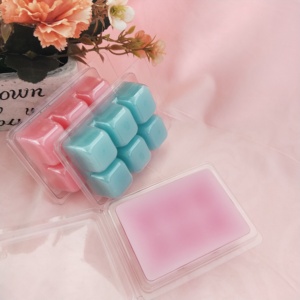
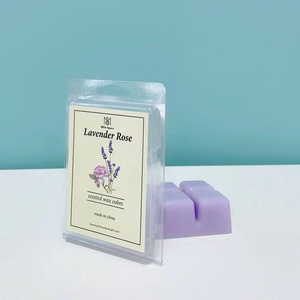
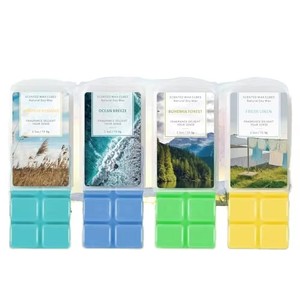
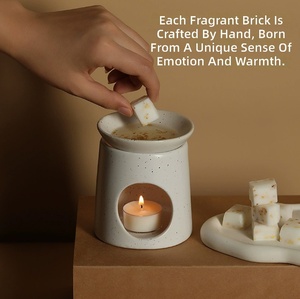
Private label wax melts and reed diffusers have experienced explosive growth in urban European and Turkish boutique retail. We manufacture complete, shelf-ready clamshell wax melt units utilizing clean-burning soy and rapeseed bases.
3. Localized Market Trends & Industrial Forecasts (2025–2030)
Our market research unit identifies three structural shifts governing perfume oil procurement over the coming decade:
- The Clean Olfactory Standard (Phthalate & Nitro-Musk Elimination): European consumer protection agencies (ECHA) continue to expand the SVHC (Substances of Very High Concern) candidate list. All our compounding formulas produced in Turkey proactively exclude diethyl phthalate (DEP), polycyclic musks (Galaxolide/Tonalide), and CMR (Carcinogenic, Mutagenic, Reprotoxic) substances, ensuring hassle-free compliance across strict export destinations.
- Rise of Functional Aromatherapy in Wax Systems: Modern consumers expect scent to deliver measurable emotional benefits. We integrate standardized essential oil fractions (containing naturally occurring Linalool, Terpinen-4-ol, and Beta-Caryophyllene) into our wax melt and candle oil concentrates to substantiate "Calming," "Focus," and "Restorative" marketing claims.
- Transition to Renewable Botanical Carrier Waxes: Paraffin-based wax melts are rapidly losing market share to vegetable alternatives. However, soy wax presents technical challenges, such as crystallization ("frosting") and oil bleeding. Our proprietary blend of Turkish hydrogenated rapeseed oil and soy waxes holds up to 12% fragrance oil load while eliminating frosting on retail shelves.
4. E-E-A-T Quality Assurance & Regulatory Ownership
Building trust with global beauty conglomerates and independent private label brands requires complete operational transparency. Our manufacturing facility operates under strict Quality Assurance frameworks:
- ISO 22716:2007 (Cosmetic Good Manufacturing Practices): Every batch of perfume oil and cosmetic wax melt is manufactured in clean-room environments with full batch tracking, automated mass-spectrometry evaluation, and 24-month retained sample archives.
- In-House Regulatory Bureau: We do not outsource regulatory documentation. Our in-house compliance specialists generate 16-point Safety Data Sheets (SDS) in accordance with GHS/CLP regulations, IFRA 51st Amendment certificates, 26-allergen disclosures, and cosmetic safety assessments (CPSR) required for CPNP portal notification in Europe.
- Gas Chromatography-Mass Spectrometry (GC-MS) Verification: To guarantee absolute batch-to-batch consistency, incoming botanical extractions and outgoing fragrance compounds undergo GC-MS testing. This ensures that peak areas for key olfactory markers remain identical across initial sample sign-off and high-volume industrial production runs.